
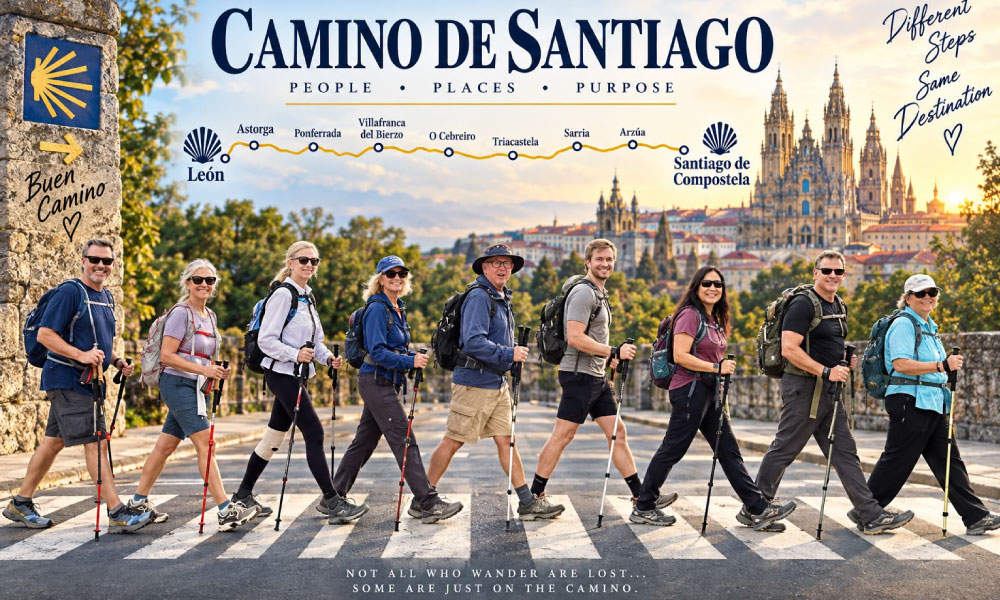
There is an old tradition that the name Compostela comes from Campus Stellae—“the field of stars.”
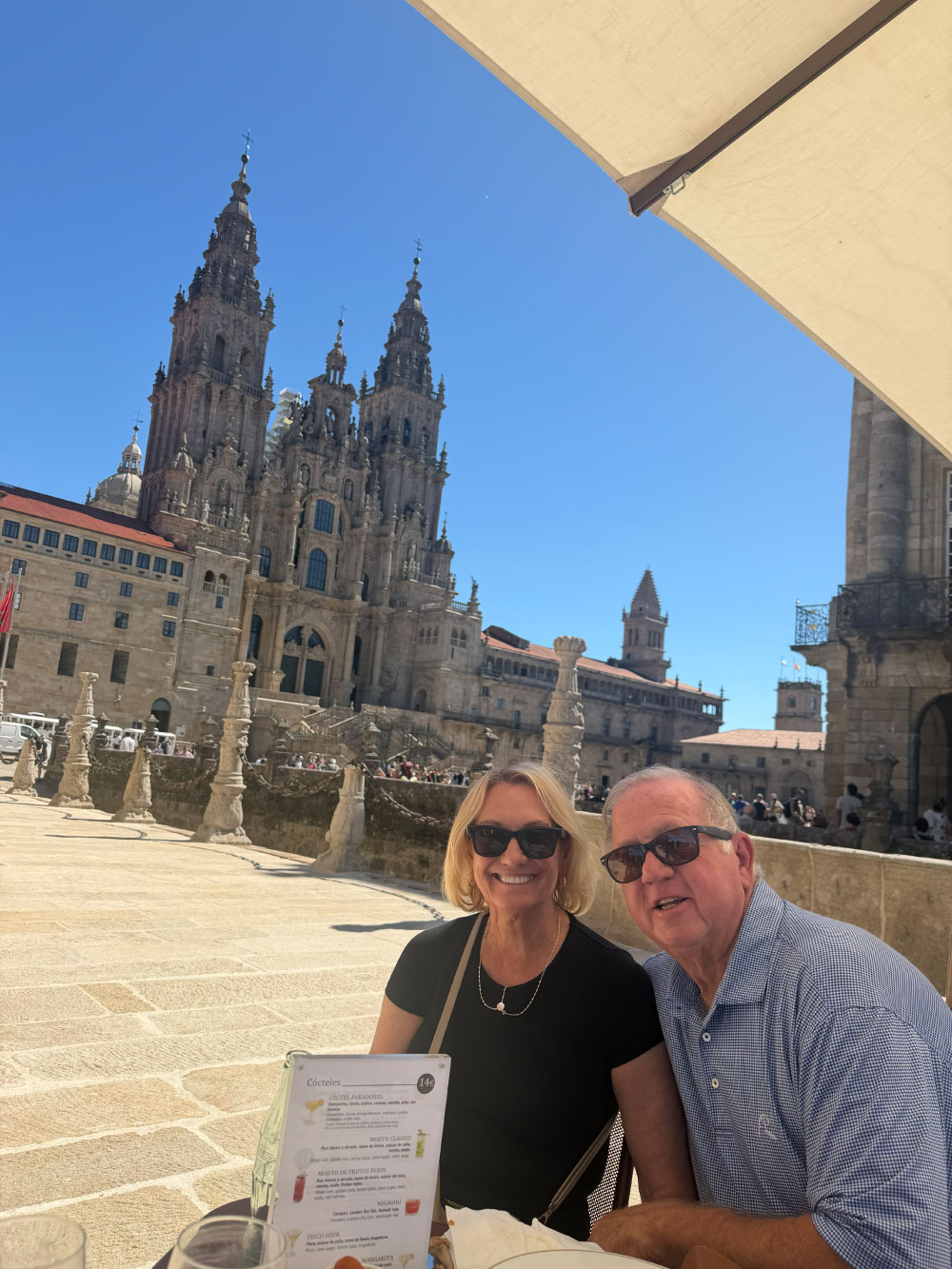
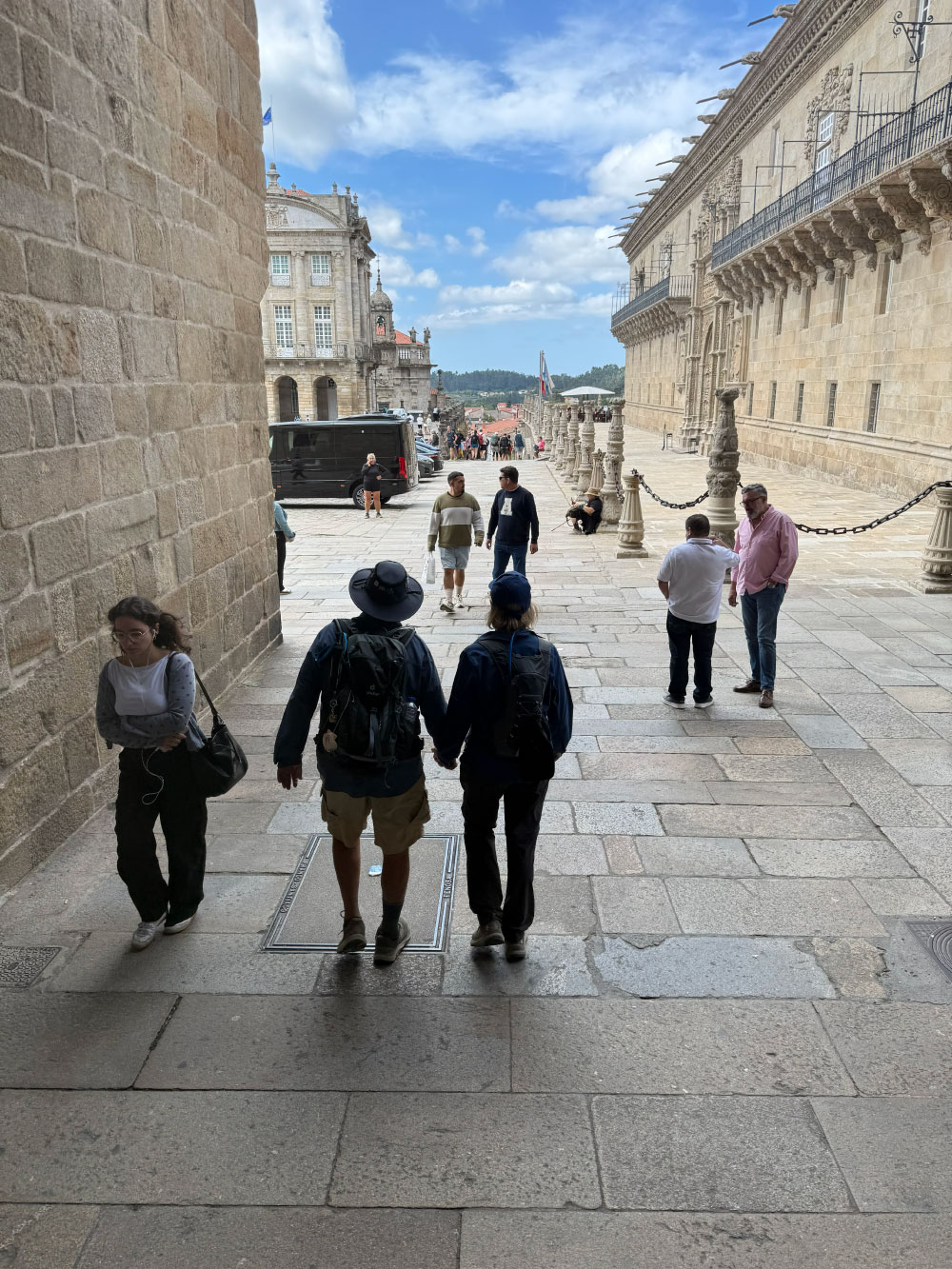
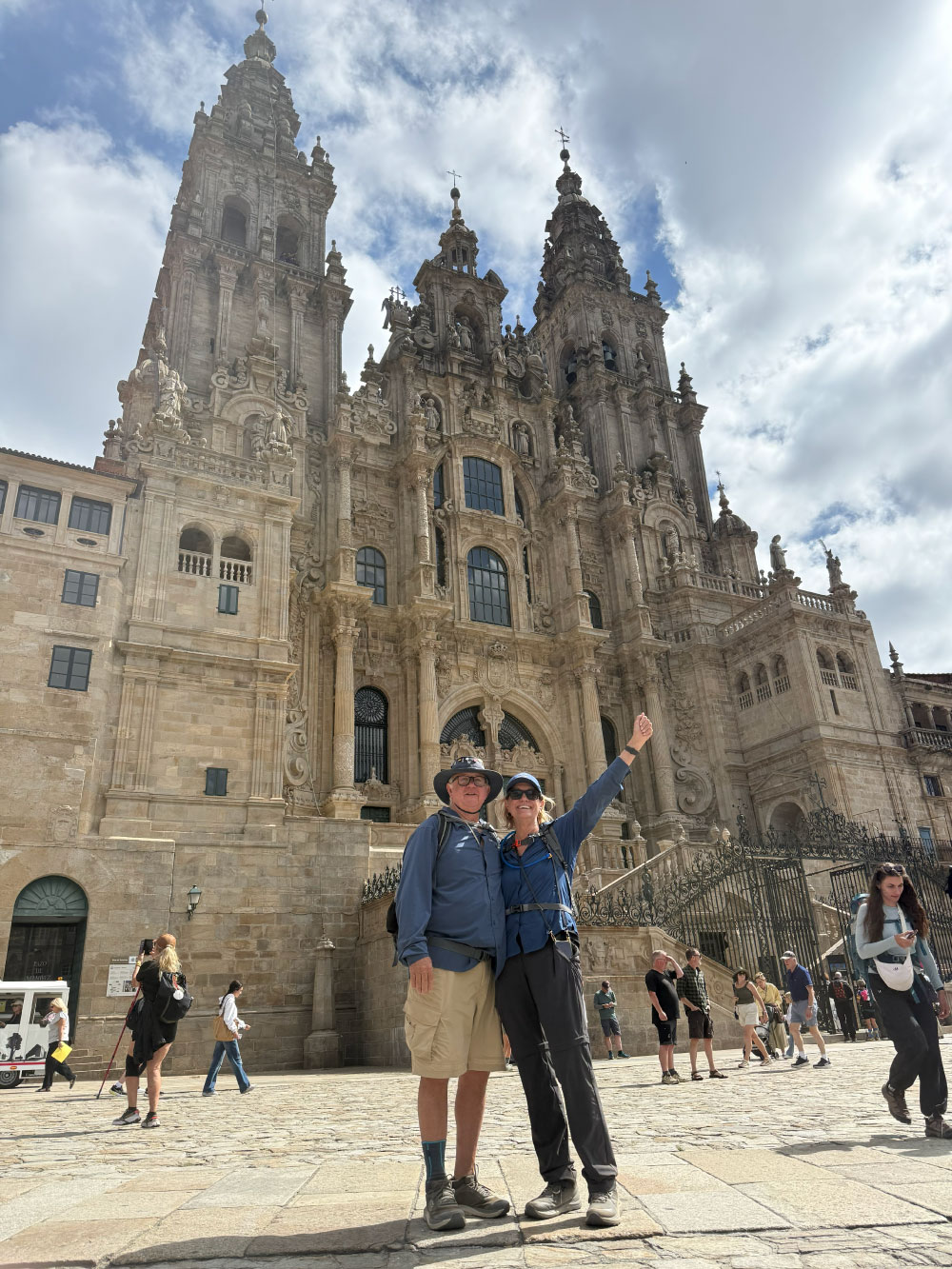
I love that image, because on the day we walked into Santiago, that is what it felt like.
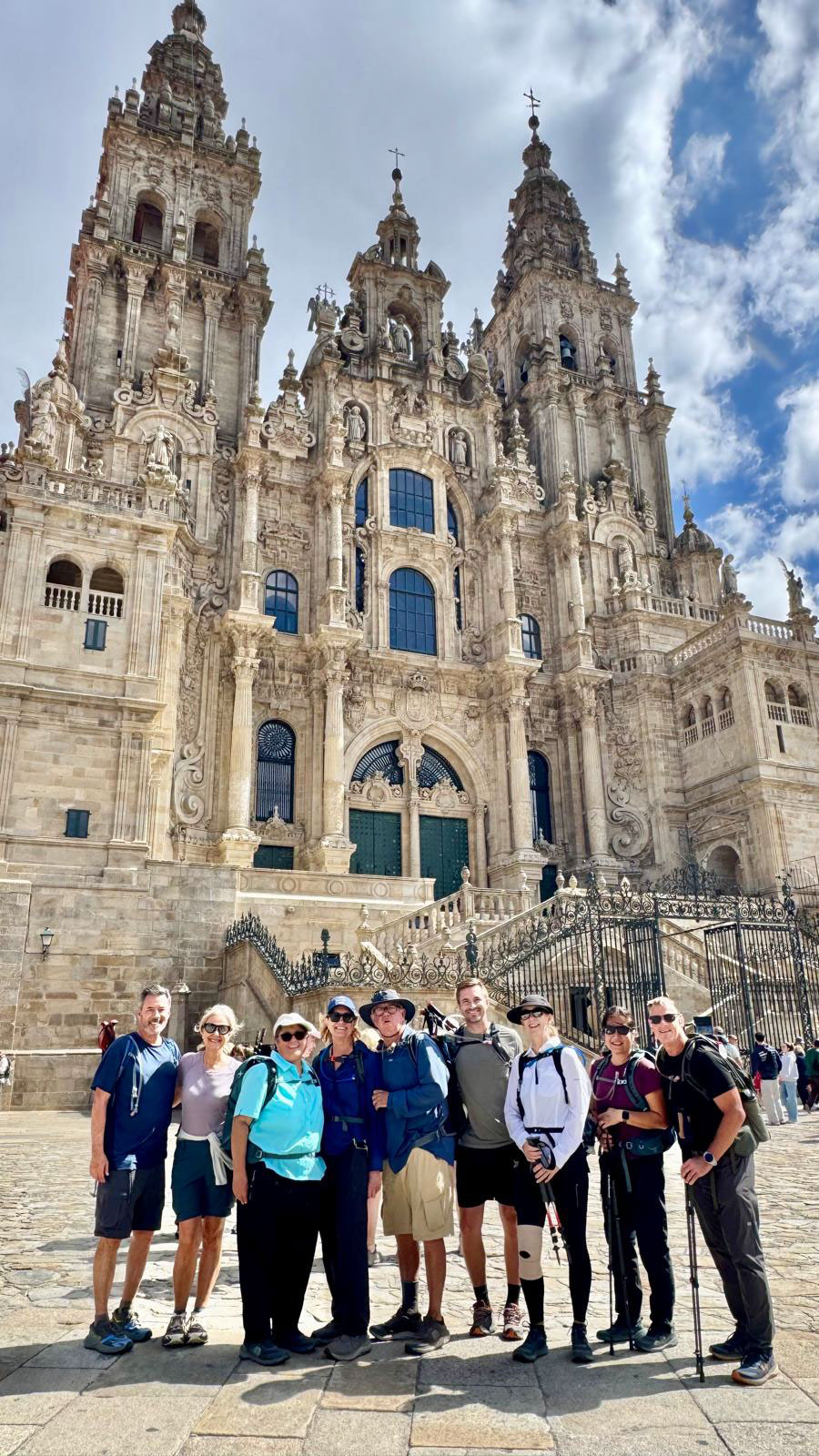
More than 3,400 pilgrims arrived that day. We came from different countries and different starting points. We had walked different distances and carried different stories. For weeks we had been scattered across Europe, following different roads and looking to the same yellow arrows for navigation.
And then we all converged here—into a field of stars.
For us, it had been more than 420 miles, 800,000 steps and the equivalent of 758 flights of stairs. But those numbers don’t begin to tell the story.
We crossed mountains and forests, vineyards and the long, quiet Meseta. We walked through heat, rain and darkness before dawn. There were days I felt strong and days when I wondered how many more miles my legs could carry me.
We learned to rest. We learned that everyone has to walk at their own pace. We learned how little we really need. We learned that sometimes the person you meet for five minutes can become a memorable part of your Camino.
And we learned that solitude and community can somehow exist together.
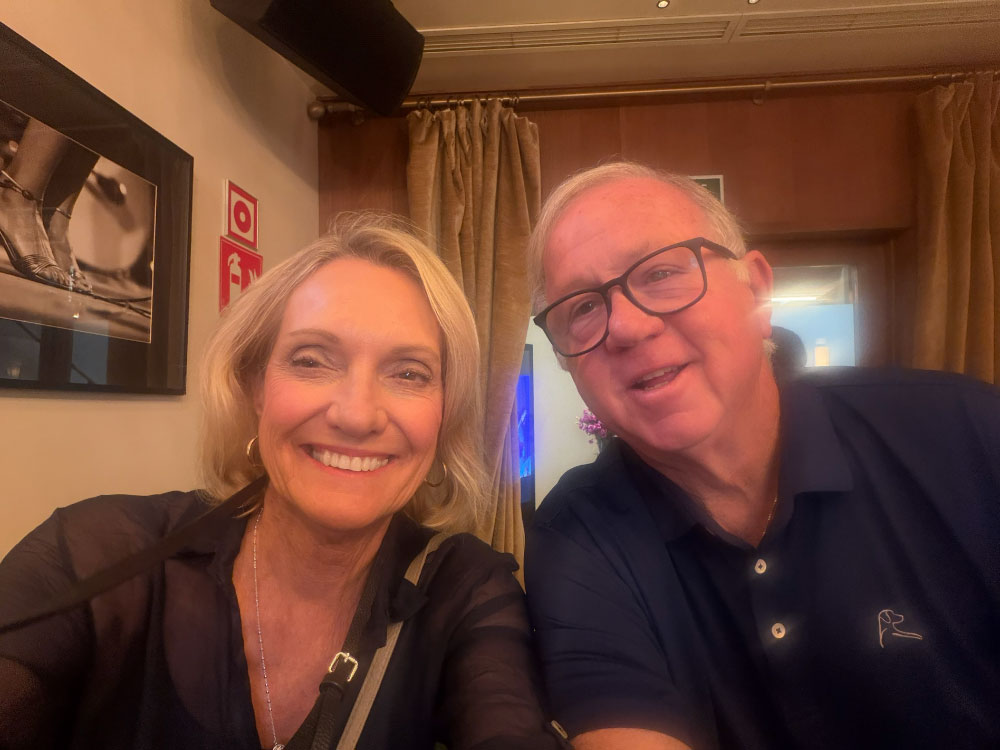
There were long stretches when it was simply Chuck and me walking side by side, sometimes talking and sometimes saying almost nothing. And yet we were surrounded by this extraordinary community of pilgrims. Familiar faces kept appearing. Buen Caminos were exchanged. Food was shared. People helped one another. Friends joined us in León. And near the end, our son Chris traveled all the way to Spain to surprise us and walk the final days into Santiago.
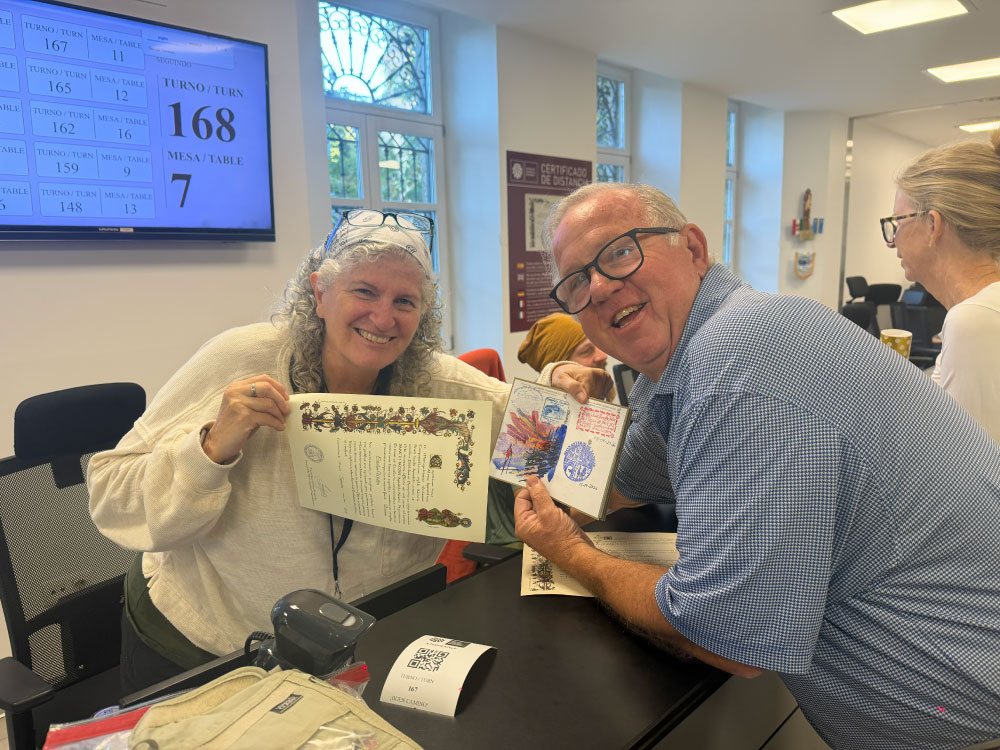
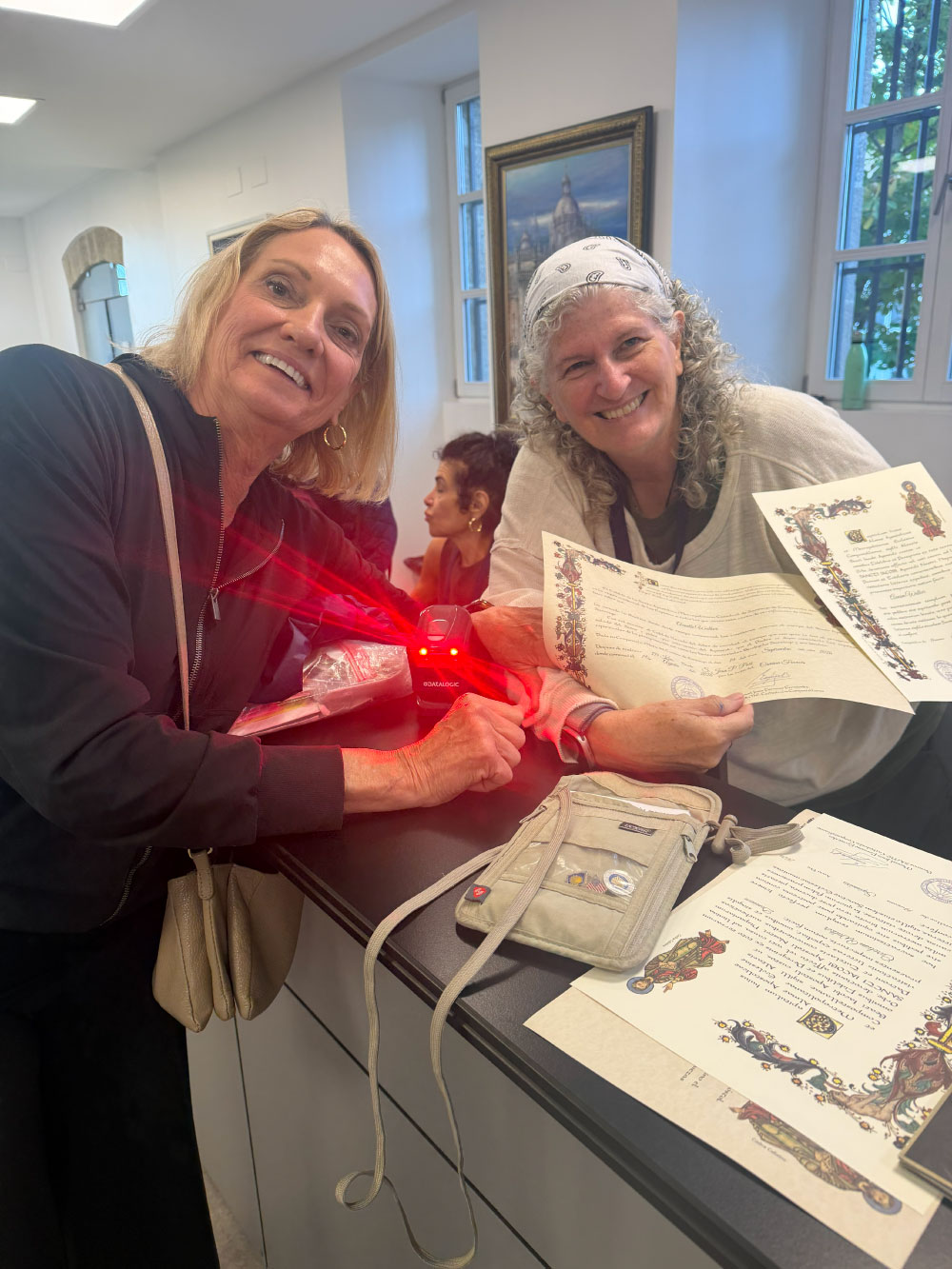
Our second day in Santiago continued to provide surprises. It started with our visit to the Pilgrim Office to receive our Compostelas. In earlier times, pilgrims came to Santiago seeking a plenary indulgence, and the Compostela became evidence that they had completed their pilgrimage. Today, it is the official acknowledgment of a journey that represents so much more than the miles walked.
After receiving ours, we wandered through the visitors center, reading some of the reflections and testimonies other pilgrims had left behind.
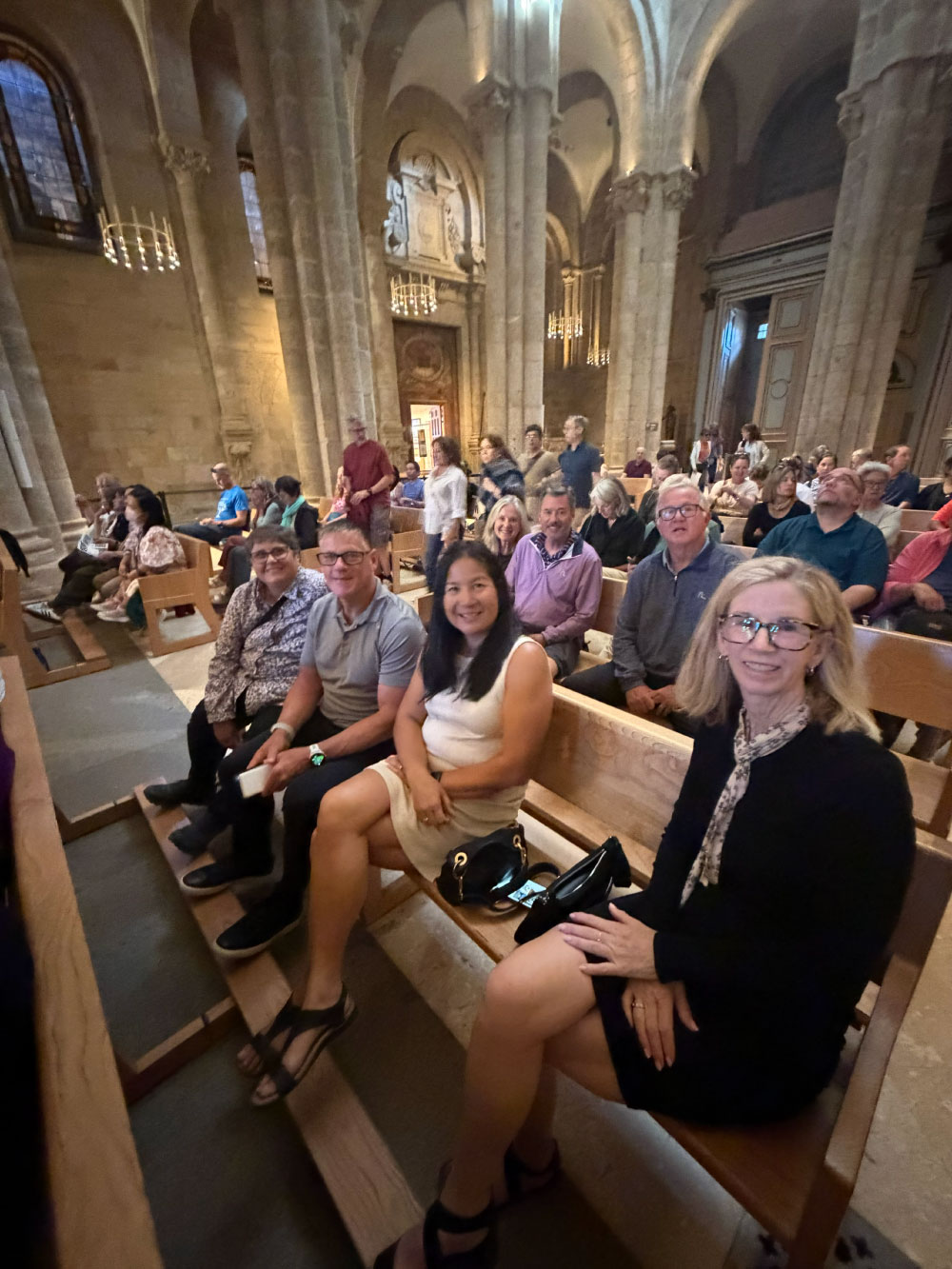
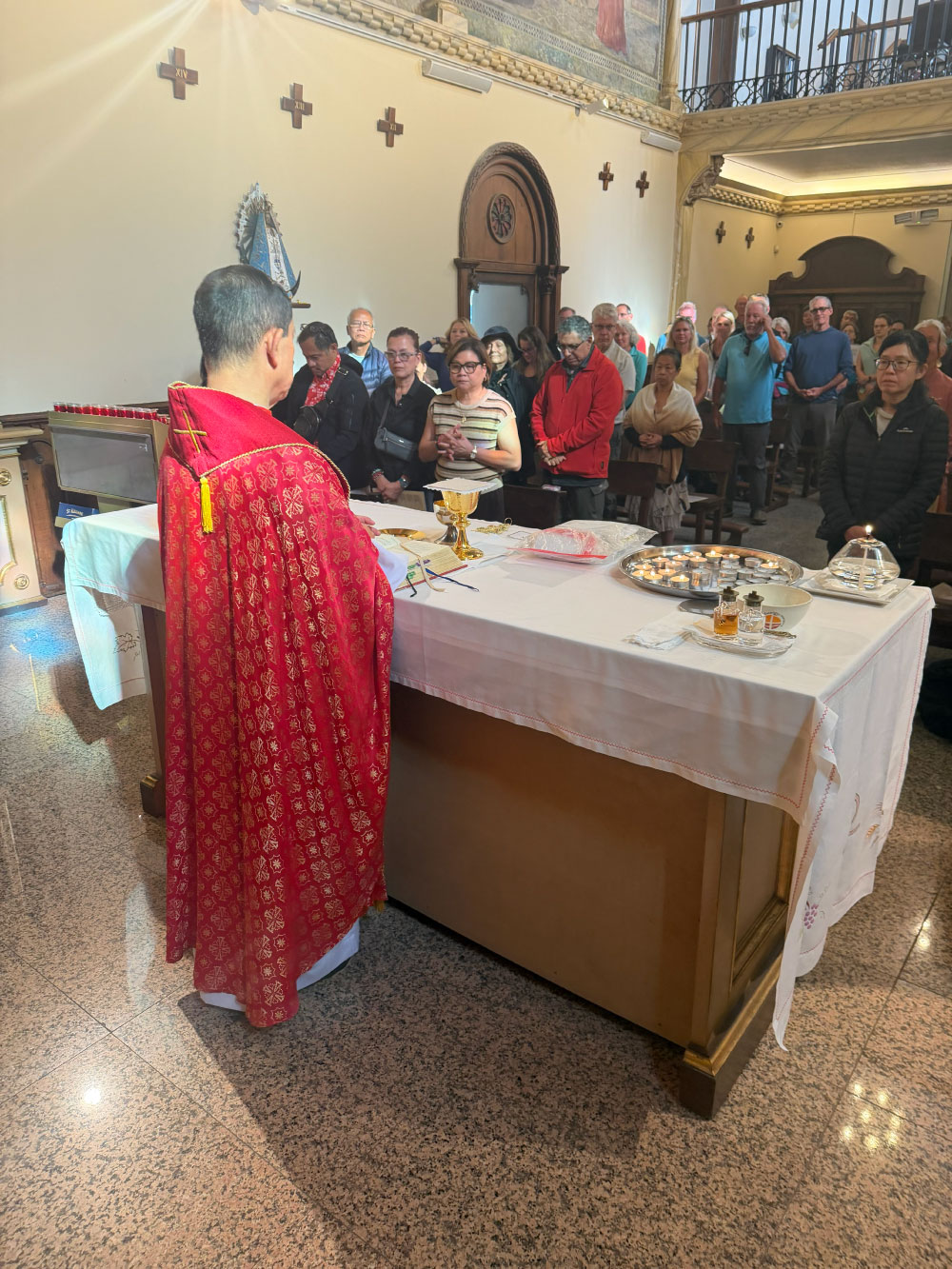
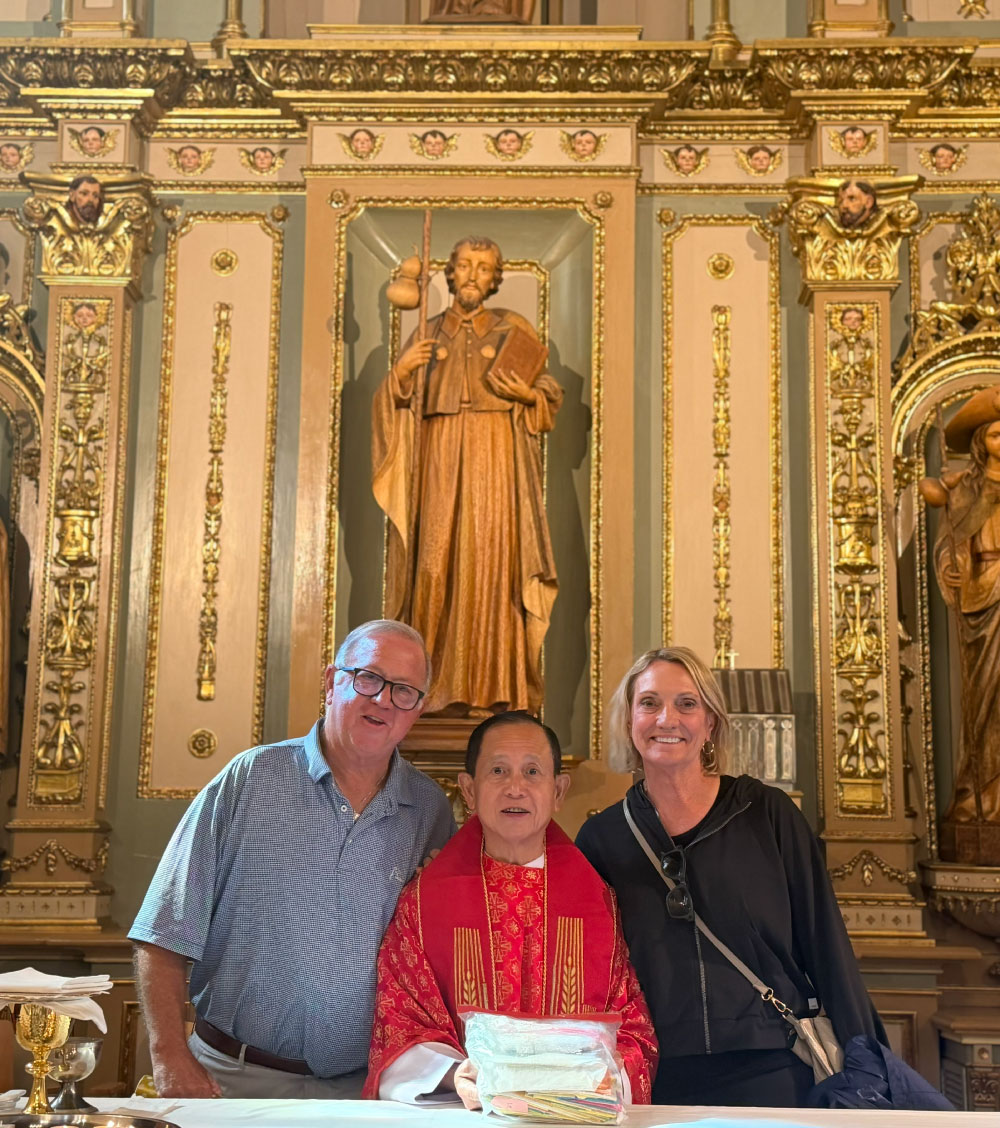
And then, in true Camino form, with absolutely no intention of doing so, we happened upon an English Mass. We had no idea how much we needed to be there—or to meet Father Manny Domingo.
Almost immediately, his words seemed to gather up so much of what we had experienced over the previous month. He spoke about the silence and solitude of the Camino, its simplicity and its extraordinary brotherhood. He spoke about arriving in Santiago not as the end of pilgrimage, but as a transition—from being a pilgrim on the Camino to becoming a pilgrim in life.
And then, during the Mass, he invited those of us gathered there to come forward and share any special intentions we had.
That was when we knew.
This was where they belonged.
Before we left home, so many people had entrusted us with their prayers and intentions. Names. Illnesses. Losses. Children. Families. Hopes. Fears. People we knew and people we didn’t. Most were written down, but others had simply been placed in our hearts.
We had carried them from home to St. Jean, over the Pyrenees and across the Meseta. Through heat and rain. Into tiny village churches and magnificent cathedrals. We carried them to Mass after Mass. We prayed for them as we walked.
Day after day, mile after mile, they came with us.
Inexplicably, some days they felt heavier than others.
There had been moments along the Camino when we physically laid things down. At the Cruz de Ferro, we left the stones bearing the names of our children and grandchildren, and another for our City of Hope patients and families.
But these intentions were different.
We had promised to carry them to Santiago.
And we had.
Now there was nothing left for us to do with them—except place them on the altar and surrender them.
I think that may have been one of the most emotional moments of the entire Camino. For all those weeks, our job had simply been to carry them faithfully.
Now our job was to let them go.
Maybe that is part of pilgrimage, too.
Knowing what we are meant to carry.
And knowing when it is time to place it in God’s hands.
I don’t want to forget what THE WAY taught us.
Slow down. Pay attention. Walk at your own pace. Accept help and offer it. Make room for silence. Notice the person walking beside you. Rest. Trust even when you can’t see very far ahead. Carry one another when you can—and surrender what was never yours to control.
Perhaps the real challenge of the Camino begins now: to bring those lessons home and live them.
Now we begin the journey of becoming pilgrims in life.
The final song of our final Mass seemed to gather up the whole journey.
And then came the refrain:
“Be not afraid, I go before you always.”
After all those miles, perhaps that was the final lesson of the Camino.
We were never walking alone.
And thank you to all of you for walking with us. Buen Camino.
PS: Chuck the video is for you Thank you to Caleb Collins for writing such a beautiful song.

3 comments
So the video made me cry.. it was amazing to watch.
This is beautiful!! Amen!!
Thank for sharing your journey.