
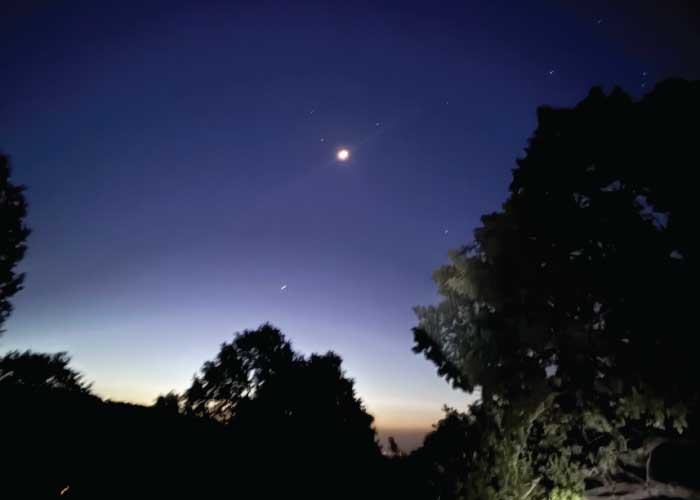
We started in the dark, climbing toward Cruz de Ferro.
Above us, the stars were still visible, and there was something beautiful about beginning this part of the Camino before the sun came up.
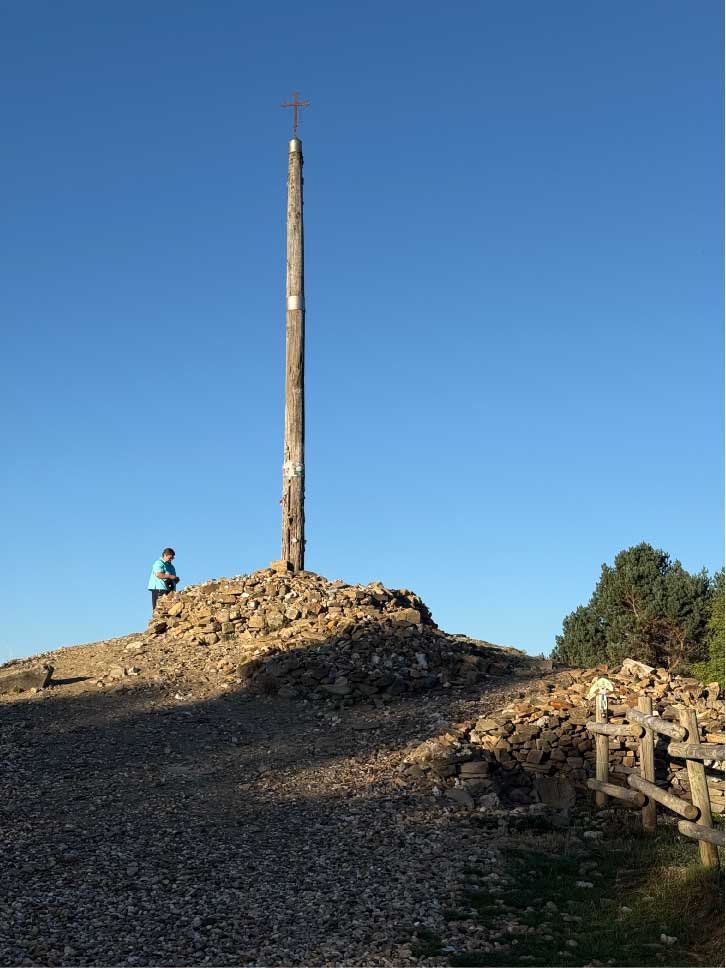
Cruz de Ferro is one of the most meaningful places on the Camino. For centuries, pilgrims have carried stones from home or picked them up along the trail and left them at the base of the simple iron cross that stands high on the mountaintop.
Standing there and looking at the enormous mound of stones, Chuck said something that stayed with me. Each one represented something someone had carried there — hopes, dreams, prayers, sins, sorrows and joys — thousands and thousands of lives represented in a pile of stones.
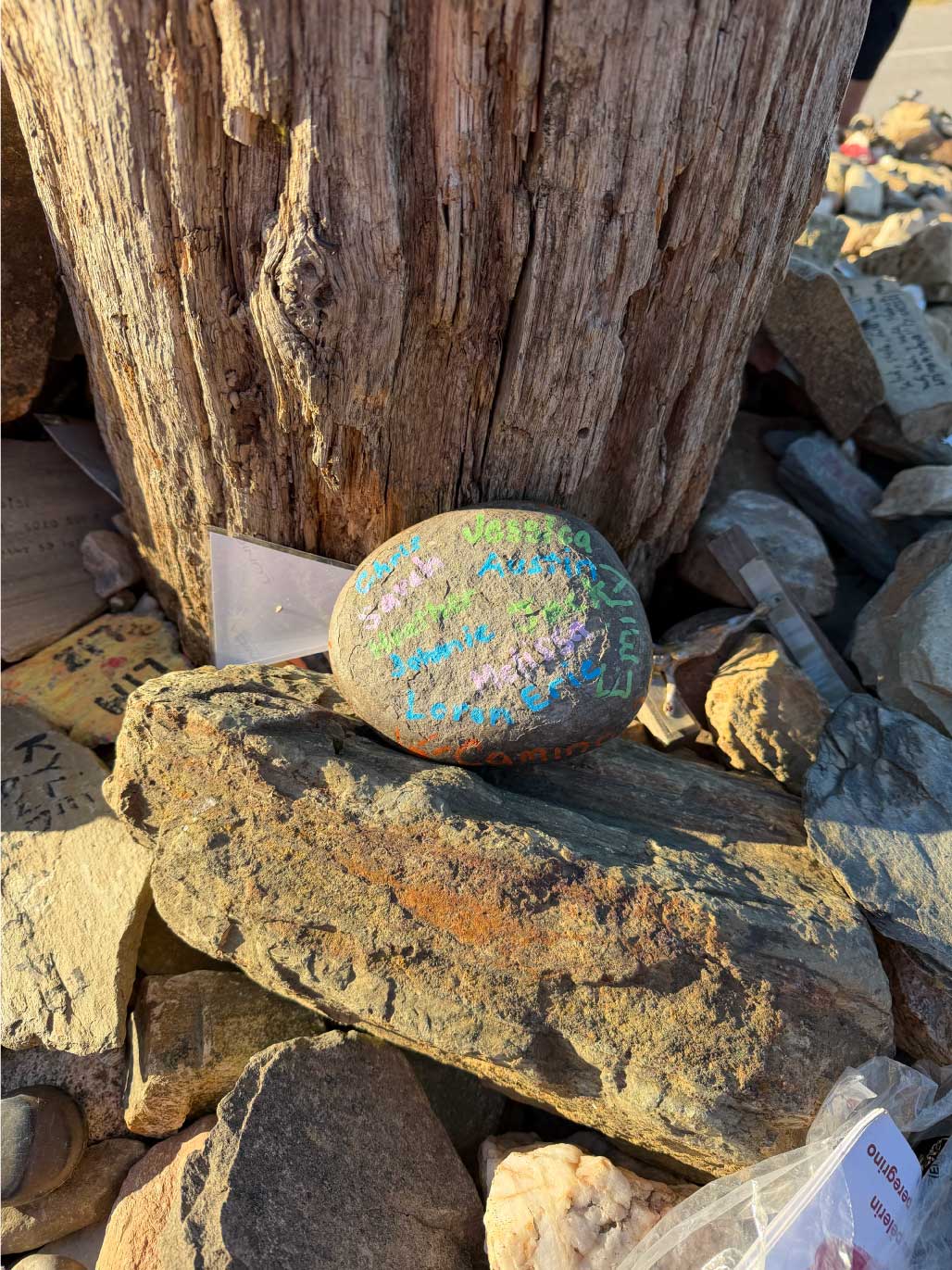
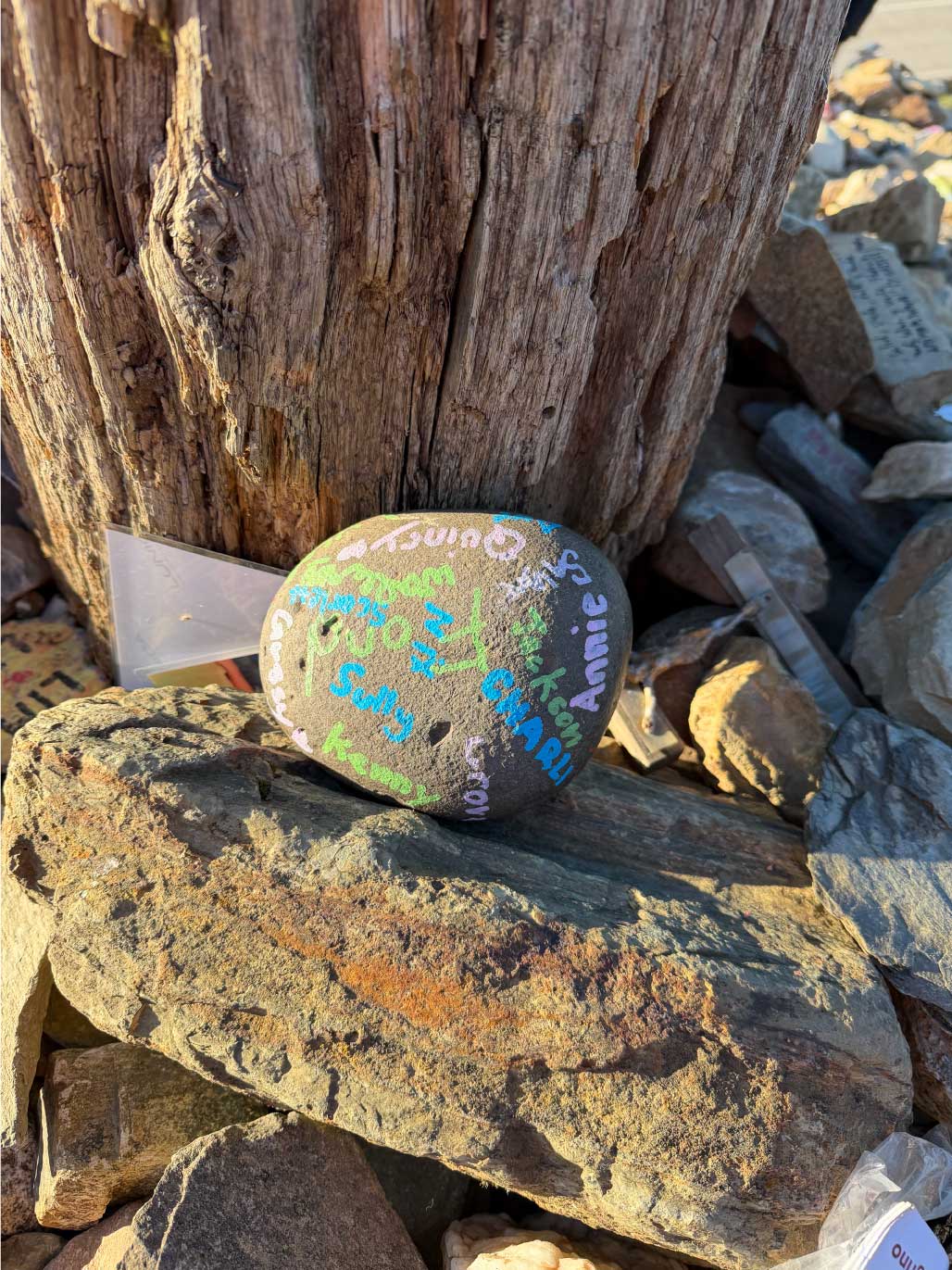
We carried one stone with the names of all of our children and grandchildren written on it. We placed it there together and prayed for each of them — not that their lives would always be easy, but that they would be good and meaningful lives, filled with purpose, love and faith to carry them through whatever comes.
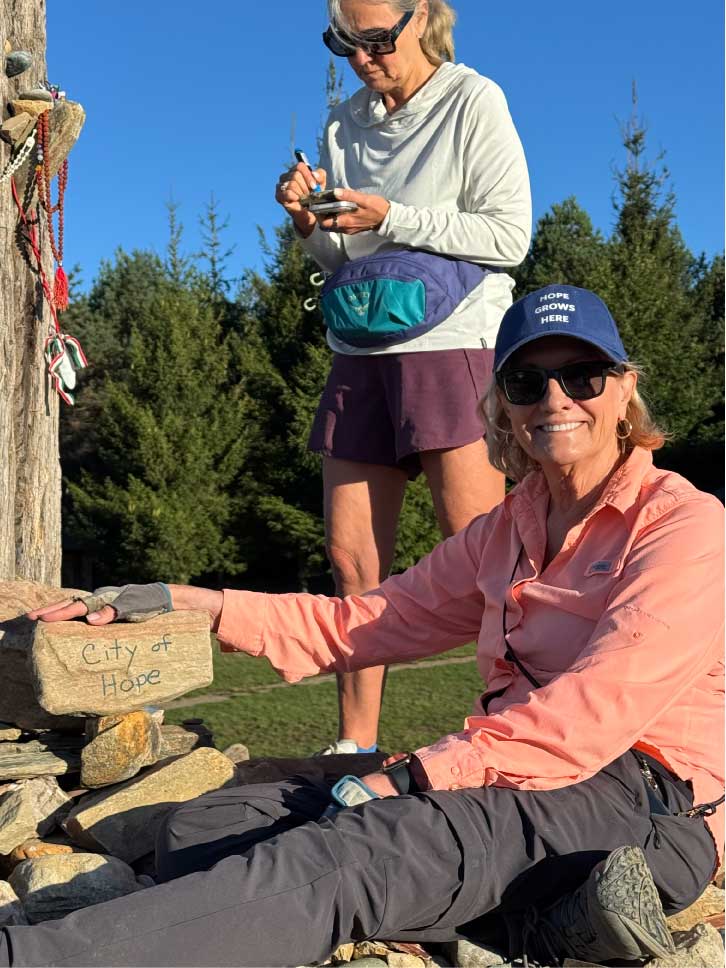
Once there, I chose a large stone and wrote City of Hope on it. I thought about all of our patients who come to us in need. Each one of them arrives carrying something too — hope for more time, for healing, for another birthday, another holiday, another ordinary day with the people they love. I placed that stone among the others and said a prayer for all of them.
Then we continued walking.
Several years ago, when we walked this section of the Camino, what came next caught us completely by surprise.
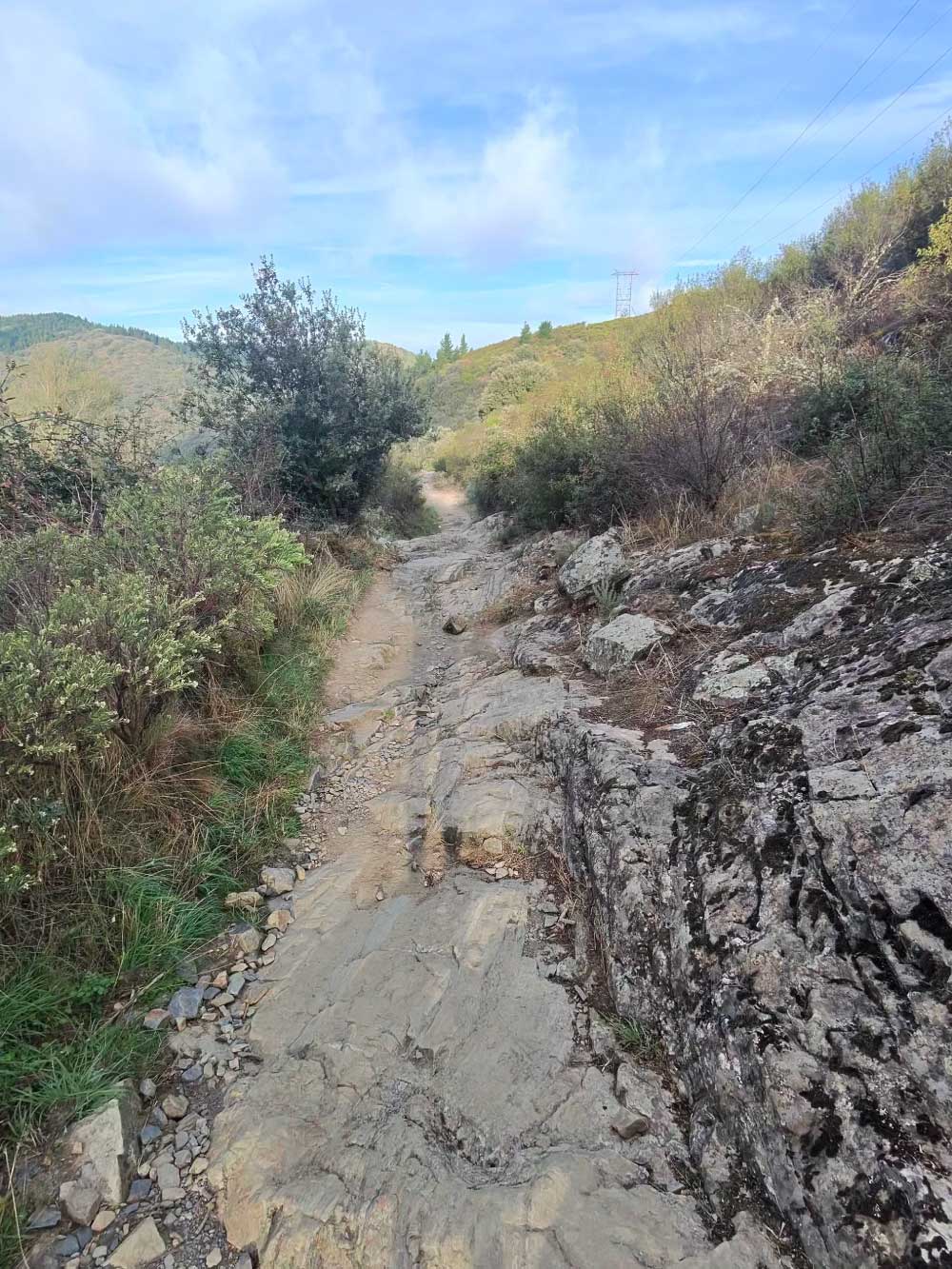
The descent toward Molinaseca is a twelve-mile downhill section of rocks, loose shale and difficult footing. That day it was close to 90 degrees, and we were completely unprepared for how hard it would be.
I remember thinking we had already accomplished the difficult part when we reached Cruz de Ferro.
We hadn’t.
This time, however, we knew what was ahead. We were better prepared. We understood the terrain. We divided the descent mentally into two six-mile sections instead of allowing twelve difficult miles to overwhelm us before we began.
And something interesting happened.
It was still hard.
The rocks had not changed.
The mountain had not changed.
The distance had not changed.
But we had changed.
We had now walked hundreds of miles.
We had learned that being tired does not necessarily mean you cannot continue.
We had learned that slowing down is not failure.
That asking for help is not weakness.
That something difficult does not necessarily need to be feared.
Experience had changed the way we approached the exact same road.
As we walked, I kept thinking about our children and grandchildren and that stone we had left at Cruz de Ferro.
Like every parent and grandparent, I wish I could protect them from the hardest roads they will face. But we cannot remove every difficult road from the lives of the people we love — nor should we.
What we can do is pray that, with every difficult road they travel, they become a little wiser, a little stronger and a little more confident in their ability to keep going.
That they learn when to push forward and when to rest.
When to walk alone and when to accept someone’s hand.
And that when life eventually brings them back to a road that once frightened or overwhelmed them, they recognize something important.
The trail may not have changed.
But they will have.
And they will be ready.

3 comments
This really got to me. You said it in such a beautiful way, and it feels so true. We want to protect the people we love and make the hard things easier for them, but sometimes we just can’t. We can only walk beside them and hope that somehow they come through it knowing a little more about their own strength.
“The trail may not have changed. But they will have.” I keep thinking about that line. Thank you for sharing this. It really stayed with me.
This made me cry 😭 beautifully written !!!
All of your reflections have had amazing words, but episode 8 was truly inspiring. Your words but these really were powerful to me, very beautiful. I am saving them as I continue down my new path, so I can look back on them to help when needed, to appreciate difficult times as growth and strength.